
AI & Work
People Are Getting Paid to Teach AI: What the Work Actually Involves
A useful AI training example can be a recorded action, a carefully labeled video or an expert explaining a decision. We explore how that work differs, what the advertised pay actually measures, and why human judgment matters alongside demonstrations.
Watch: people teaching AI
Reindent video · 9 min 46 sec
Watch People Teaching AI on YouTube
In our September 8, 2026 video, we explore human demonstrations, robot teleoperation and expert work through interviews with Ali Ansari, Amber Bass and Brendan Foody. The examples raise a practical question: what can someone contribute that makes an AI training task useful?
We explore AI, technology and building businesses at Reindent. Subscribe to Reindent on YouTube for more practical stories like this one.
Recording an action is only part of the task
Recording everyday activity sounds simple. But a useful demonstration has to help connect what a system sees with what it should do. Picking up a cup involves finding it, reaching for it, gripping it and moving it. Change the cup or its position and the situation changes too.
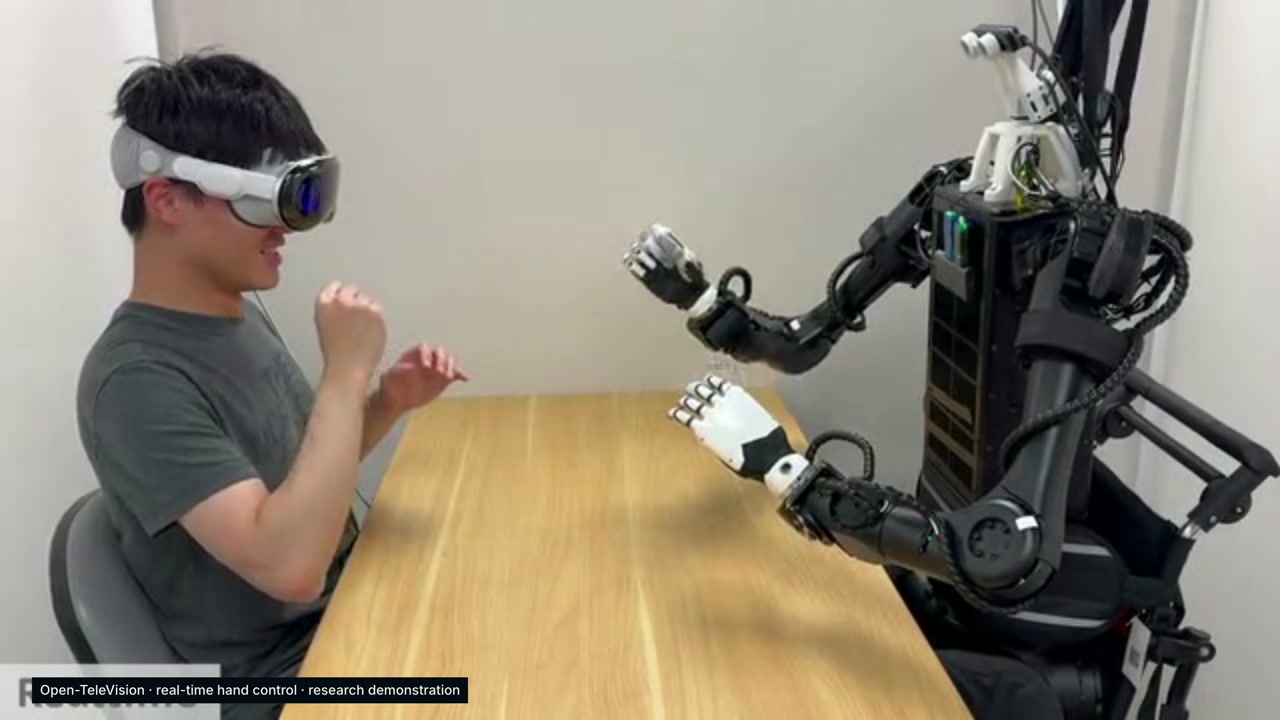
The research examples in the video show different ways to collect demonstrations. Dobb-E uses a phone attached to a grabber to capture a person's view and movements during a task. Open-TeleVision illustrates teleoperation: a person sees through a robot's cameras and guides its movements. A recording of a person acting and a person directly controlling a robot are different collection methods.
The Insta360 backpack-camera tutorial makes a memorable introduction to recording movement. It does not establish that the person shown is a paid AI worker. The same distinction applies to the research demonstrations: they illustrate methods, not employment with micro1.
In Ali Ansari's HyperChange interview, the micro1 founder describes both teleoperation data and human demonstration data. He discusses people recording tasks at home and says the resulting videos are annotated with actions. His account explains the company's approach at the time of that interview; it is not evidence that any everyday recording will be accepted or paid for.
$20 per accepted footage hour is different from $50–$90 per labor hour
The pay examples in our September 8 video refer to two separate advertised roles. They should not be combined into a promise that recording yourself earns the higher rate.
Footage capture: $20 per accepted hour of video. The listing described in the video pays for footage that is accepted. An accepted footage hour is a unit of output, not necessarily an hour of the worker's time. Setup, retakes and rejected material can make producing that hour take longer.
Video annotation: an advertised $50–$90 per hour of work. The separate listing concerns reviewing and labeling video. Its hourly labor rate is not the payment unit for capturing footage. It also does not establish what any particular applicant will earn.
These are dated examples from the reporting used in the video, not verified current openings or guaranteed earnings. You can hear the distinction in the capture-pay and annotation segment. Before comparing opportunities, examine the work, eligibility, acceptance process and payment terms for the specific role.
- What is the deliverable? Recording a task, labeling footage and evaluating a result are different kinds of work.
- What unit earns payment? Check whether payment is for accepted output, hours worked or a completed task.
- What happens when work needs revision? Setup, reshoots and review can change the time needed to deliver acceptable work.
- What can you establish before applying? Check the current requirements and terms rather than relying on a rate quoted in a video.
Experts can teach the reasoning behind a decision
Physical demonstrations are one part of the story. An expert can also explain a choice that would otherwise be difficult to see in the finished result.
In her micro1 interview, corporate attorney Amber Bass describes an AI-training exercise involving contract redlines. Two teams worked from different negotiating positions and exchanged changes. Alongside each change, participants explained what they had changed and why, creating a rubric for the work.
That explanation adds something beyond the edited document. A replacement clause shows a decision; the reasoning helps explain how the clause relates to other provisions and to the team's negotiating position. This is an account of expert training work, not legal advice or a claim that an AI system can independently replace a lawyer.
Bass also describes a benefit to her own thinking. Having to articulate her edits made her examine decisions that experience had made almost automatic. In the video, teaching becomes a way to notice the judgment inside an everyday professional task.
Buyers need useful work they can evaluate
The company buying expert work faces a related problem: how does it know the result is useful?
In his 20VC interview, Mercor CEO Brendan Foody describes customers buying tasks intended to deliver model improvement. He discusses finding experts, providing the platform they work in, coordinating the work and checking quality.
His example of a customer paying $1,000 for a task describes a customer purchase. It is not an advertised $1,000 payment to an individual worker. A task price, an expert's compensation and the cost of organizing the work are different quantities.
Foody argues that some tasks contribute much more value than others. We treat that as his account of Mercor's approach, not an independently reproduced measurement. The practical question it raises is useful: how will a buyer recognize a good example and decide whether it helped?
Could you build a business around this work?
There is also work around the demonstrations themselves: organizing recordings, finding people with relevant expertise and checking the results. In the video, we explore whether a focused service could help a customer with one of those needs.
That is an exploratory business idea, not an announced Reindent service, a partnership or a guaranteed market. Our starting point would be one customer, a clear need and a small paid project that lets both sides assess the result before expanding.
For someone doing the work or considering a business around it, the questions meet in the same place: what can you demonstrate or explain, and how would someone judge whether it is useful?
Keep exploring with Reindent
AI training work can ask for a movement, a label, an explanation or a judgment. Understanding which one a project needs is more useful than treating every opportunity as the same kind of job.
Subscribe to Reindent on YouTube as we explore AI, technology and building businesses. What could you help AI learn? Share your perspective in the video's comments.
Sources and context
This article adapts Reindent's video published on September 8, 2026 and its final transcript. Interview statements and advertised rates retain their original context; the article does not independently establish model improvements, current hiring availability or earnings.
The original interviews are Ali Ansari / HyperChange, Amber Bass / micro1 and Brendan Foody / 20VC.
The video also references Insta360 Tutorials / Best360, Open-TeleVision, Dobb-E, Universal Manipulation Interface and N1 Robotics / MANUS. These demonstrations are not evidence that the people shown are paid micro1 workers.
The video is not sponsored or a paid promotion, and micro1 did not pay Reindent to make it. This article contains no referral application link.